
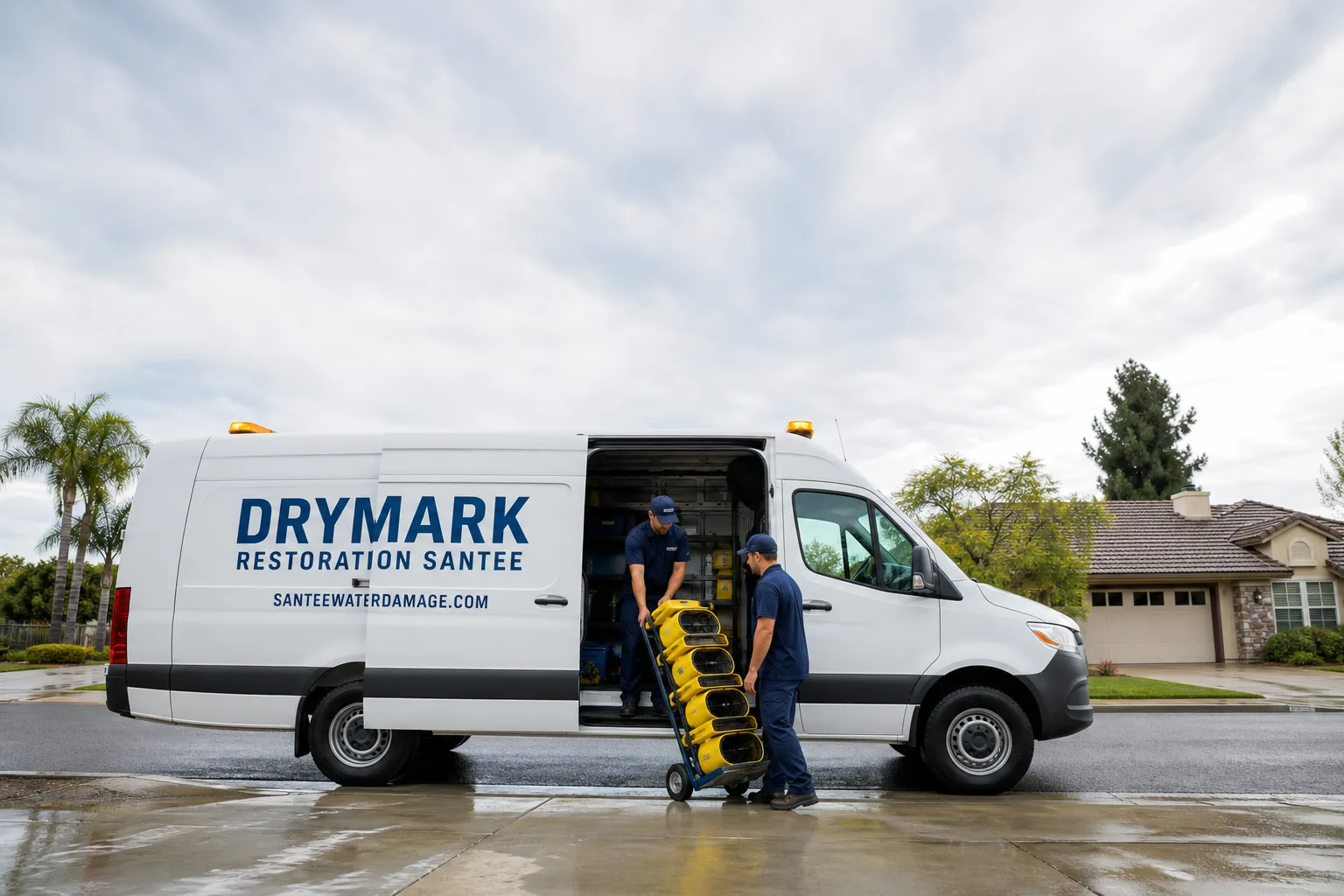
Free visual inspection and a written scope of work before any mitigation begins - photos, moisture readings, and drying logs go in your claim file
The scope we write is the scope we bill. Anything new gets shown to you, in writing, before we touch it.
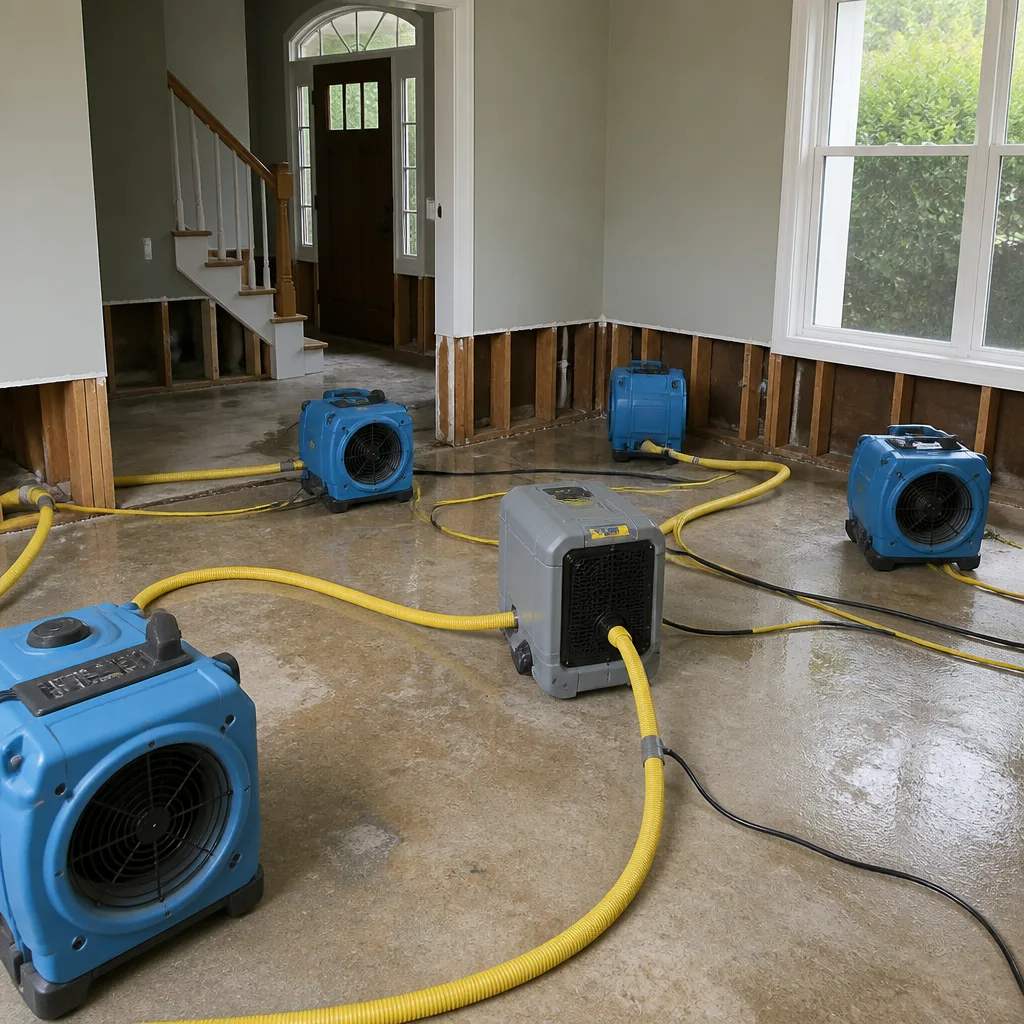

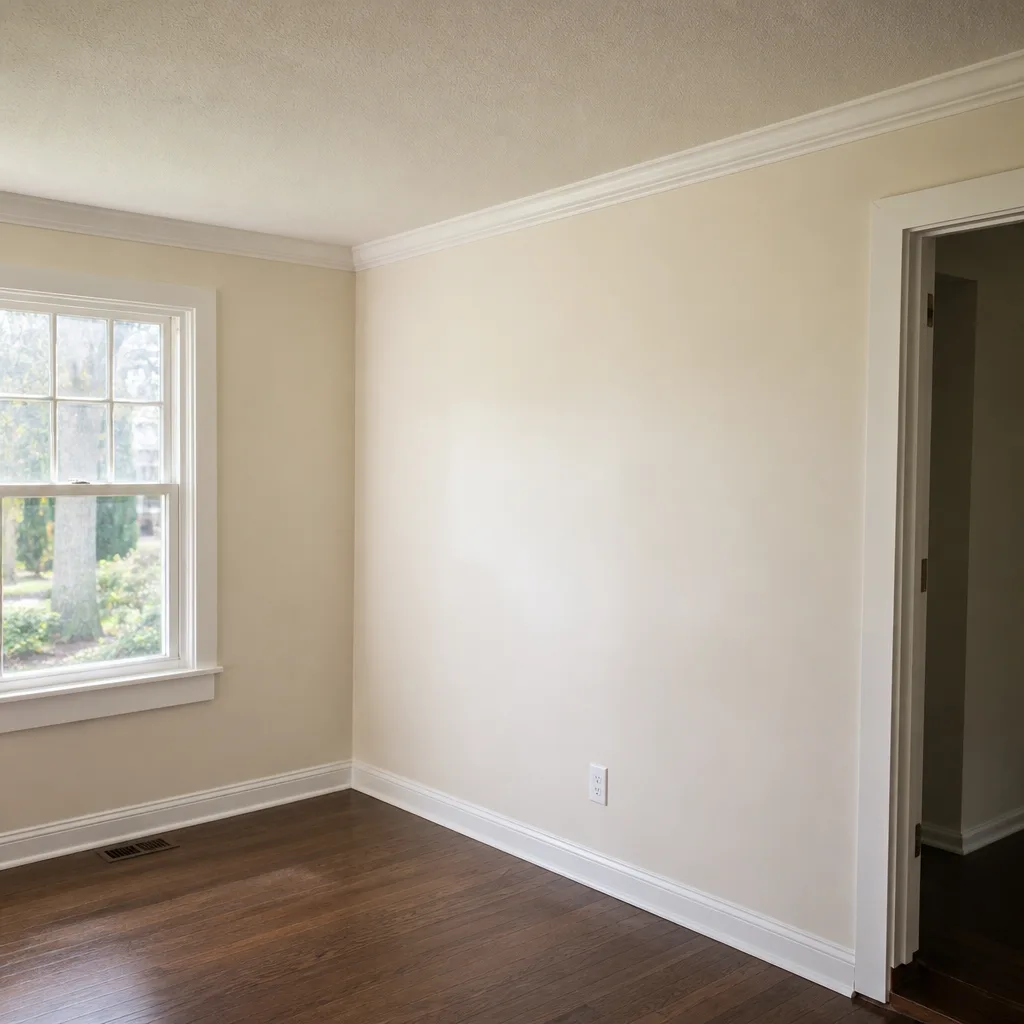
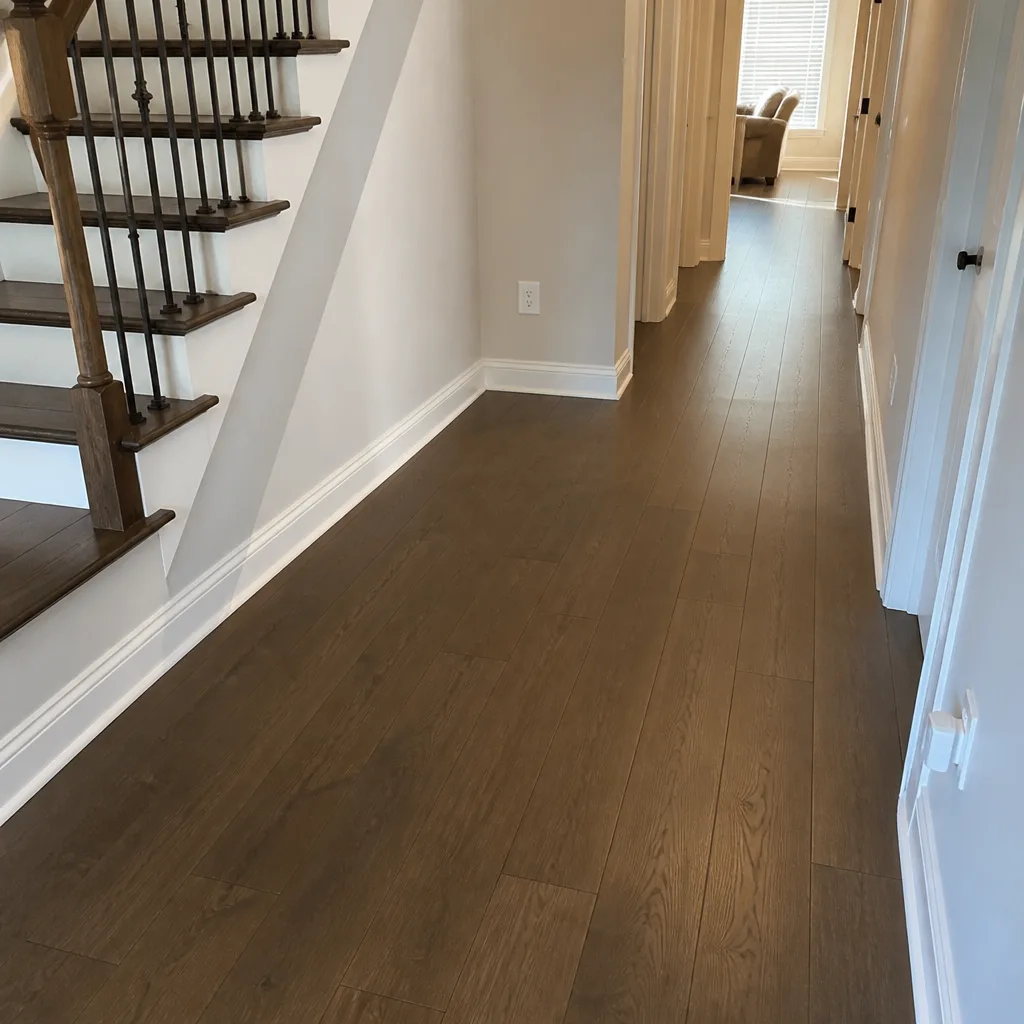

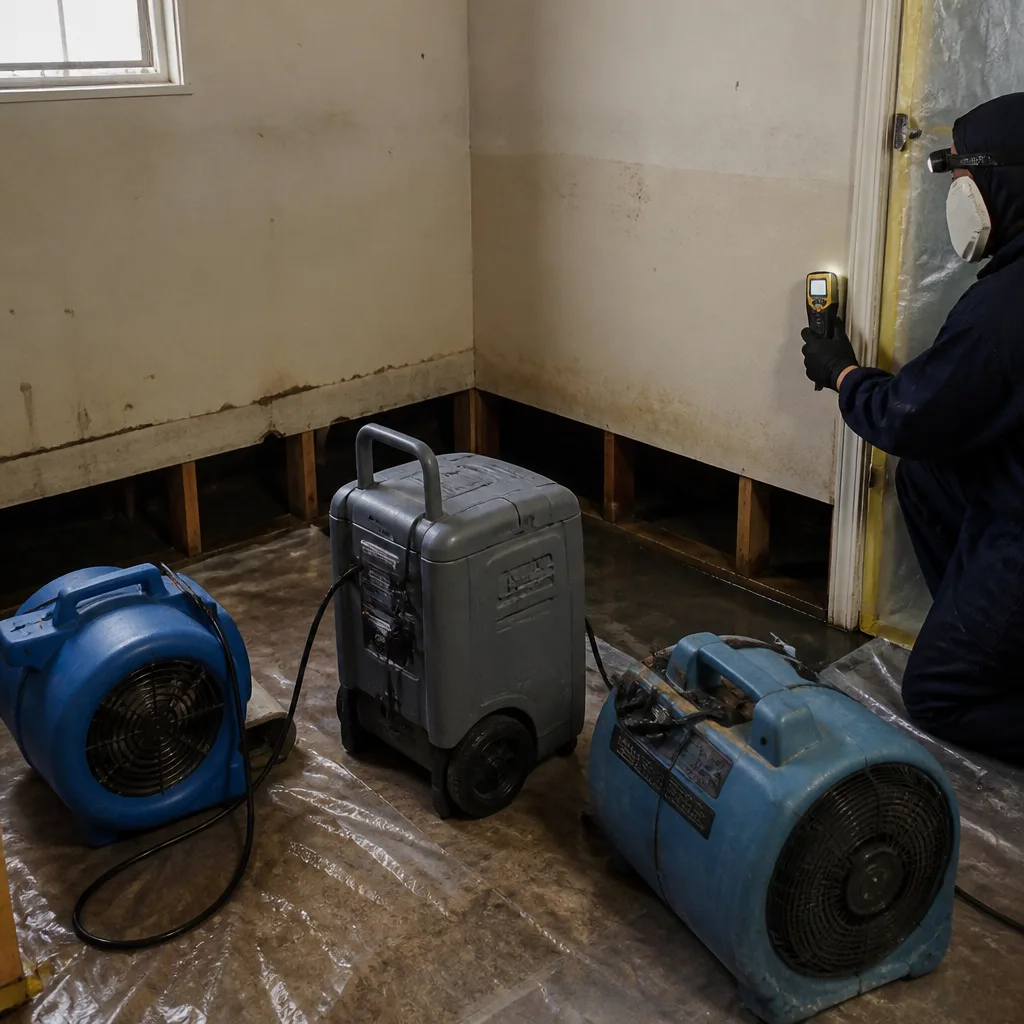 Before
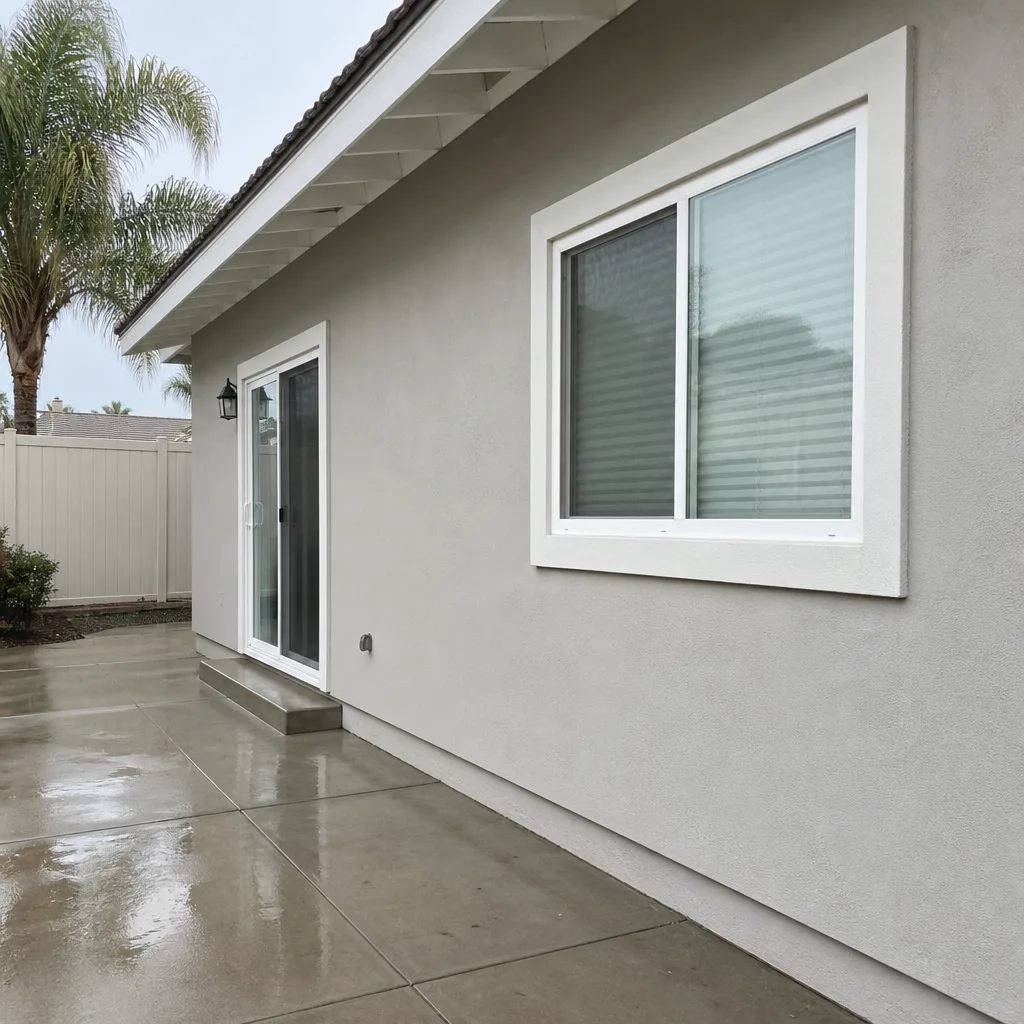 After
After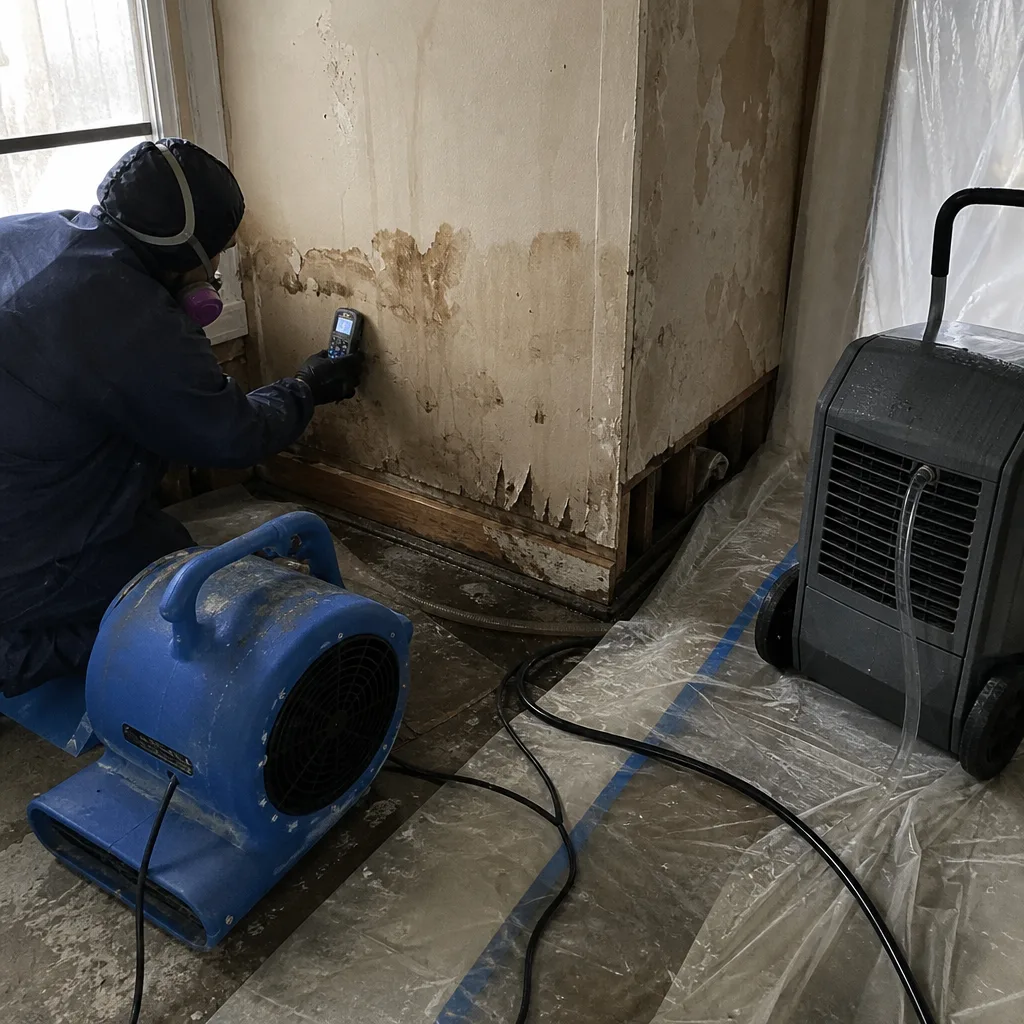 Before
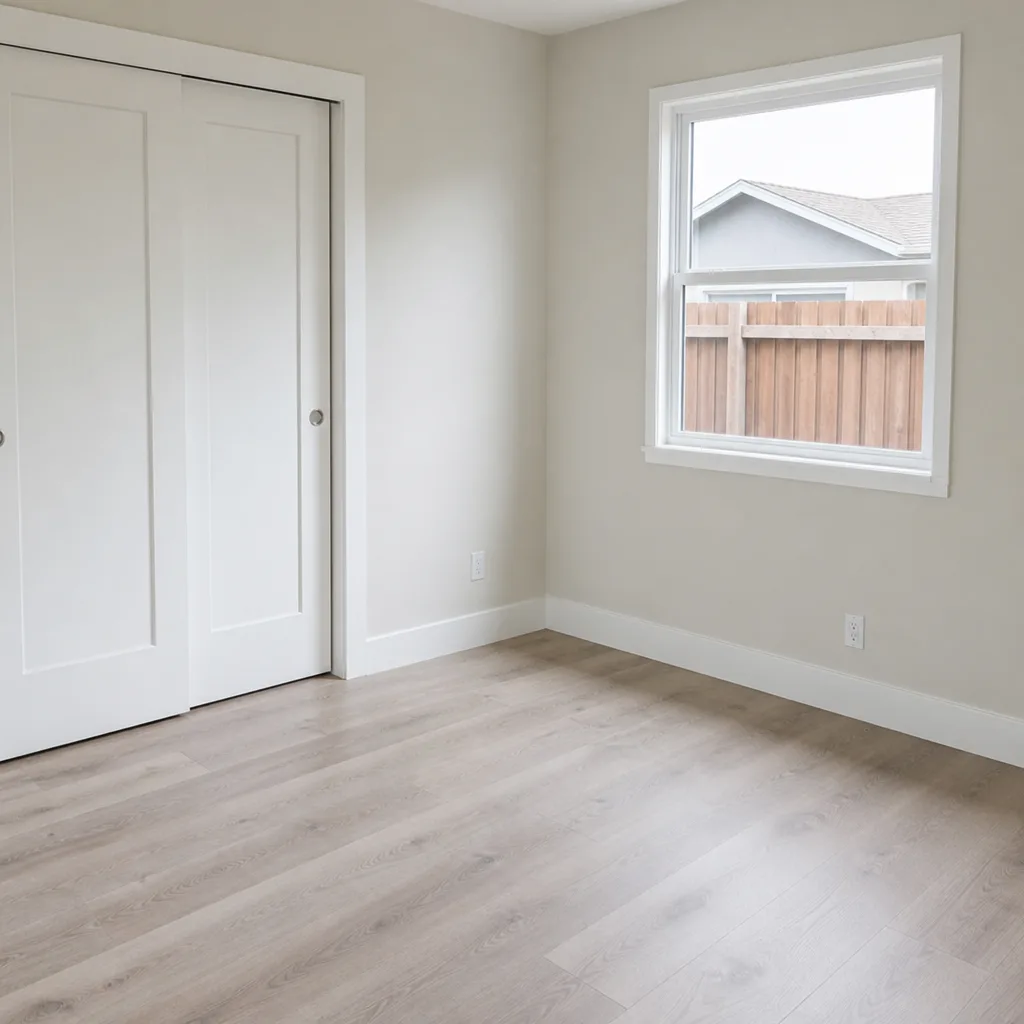 After
After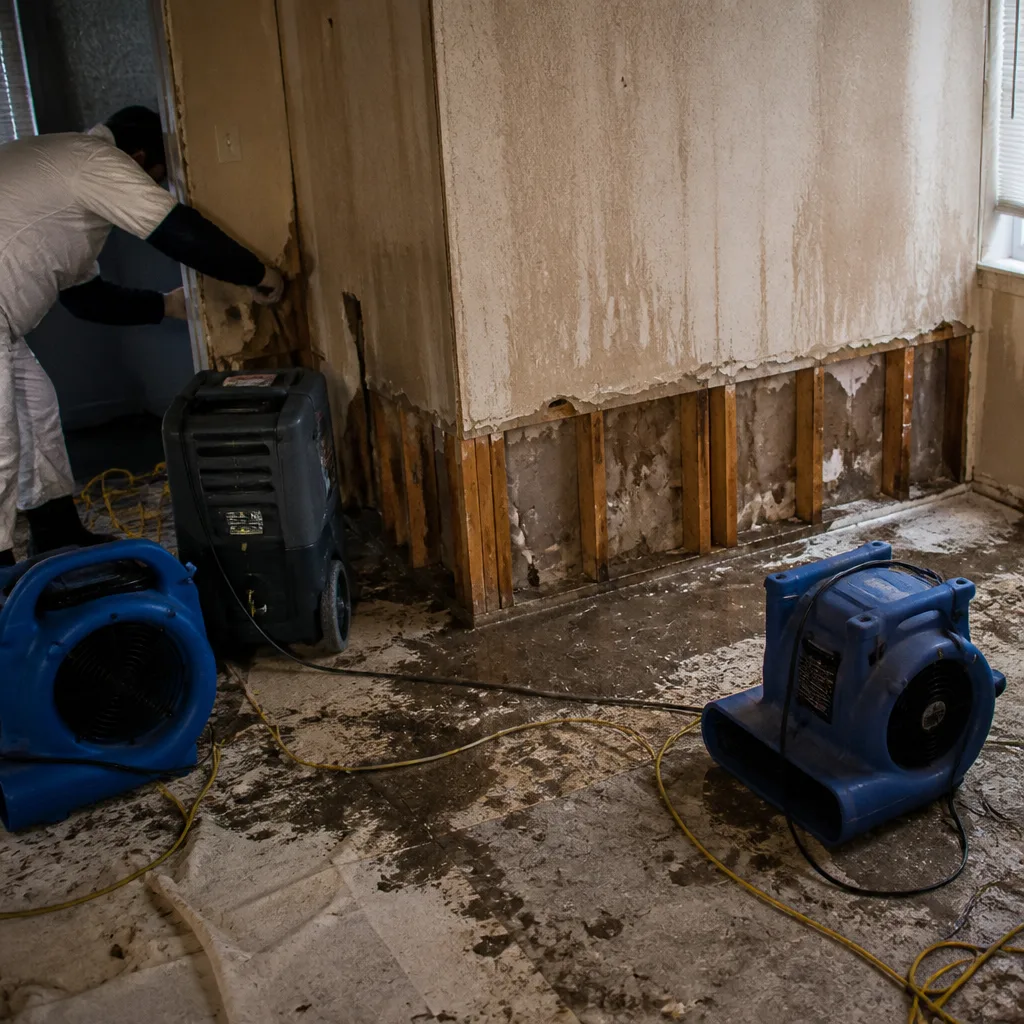 Before
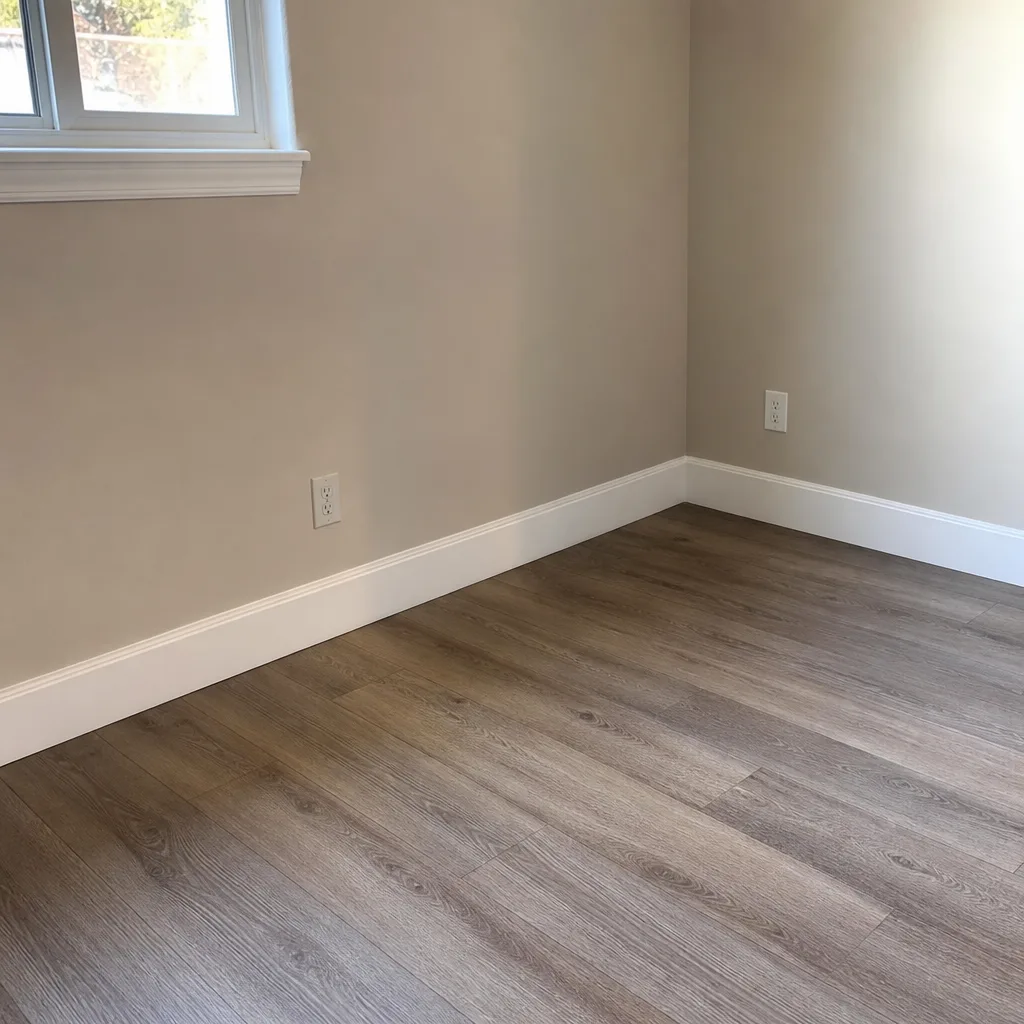 After
AfterFast, Reliable Mold Remediation Across El Cajon
Mold remediation in El Cajon typically runs $1,200-$4,500 for residential jobs, with full attic and ductwork protocols reaching $6,000-$9,000 when wildfire ash contamination is involved. Most inspections are scheduled within 24 hours, and our crews carry containment gear, HEPA scrubbers, and moisture meters on every truck serving the valley. Call (619) 604-5535 for a written estimate before any work begins.
We know El Cajon’s homes. The post-WWII ranch tracts near Madison Avenue, the older commercial strips along Broadway, the hillside properties above Jamacha Road. We’ve worked in the 92020 and 92021 zip codes long enough to recognize what the bowl-shaped valley geography does to a house after fire season. Heat, ash, then sudden runoff. The pattern repeats.
Our Mold Remediation team dispatches from the San Diego metro office with equipment staged for El Cajon’s specific conditions: Dri-Eaz dehumidifiers rated for 100°F-plus ambient temperatures, XPOWER air movers with variable speed control for tight crawl spaces, and Injectidry cavity-drying systems for the slab-on-grade construction that dominates this market. Every job starts with a written price. Haven Standard, Clause 1.
Why DryMark Restoration Santee Is El Cajon’s Preferred Mold Remediation Company
We’ve restored homes in El Cajon since our founding in 2011. Alicia Brennan built this company after working claims adjustment and seeing how many restoration invoices got denied for documentation gaps. That origin shapes how we work here: room-by-room moisture readings, photo records on every visit, drying logs formatted to IICRC standards so your adjuster pays without a fight.
Our reviews from El Cajon customers consistently cite two things: the written price that didn’t change, and the photo documentation that made their claim straightforward. We don’t chase stars. We chase signatures on scopes that match the work performed.
Response time to El Cajon runs same-day for active water intrusion and 24-48 hours for mold inspections without active leaks. The valley’s heat accelerates colonization, so we don’t book mold calls two weeks out. A live person answers at (619) 604-5535, 24 hours a day, no voicemail tree.
Local knowledge that matters here: we know which El Cajon neighborhoods built before 1970 have original ductwork that acts as ash delivery systems after Santa Ana wind events. We know where Forester Creek overflows its channel. We know that a musty smell in January often traces back to fire season ash that sat dormant until the heater ran.
Our Mold Remediation Services in El Cajon
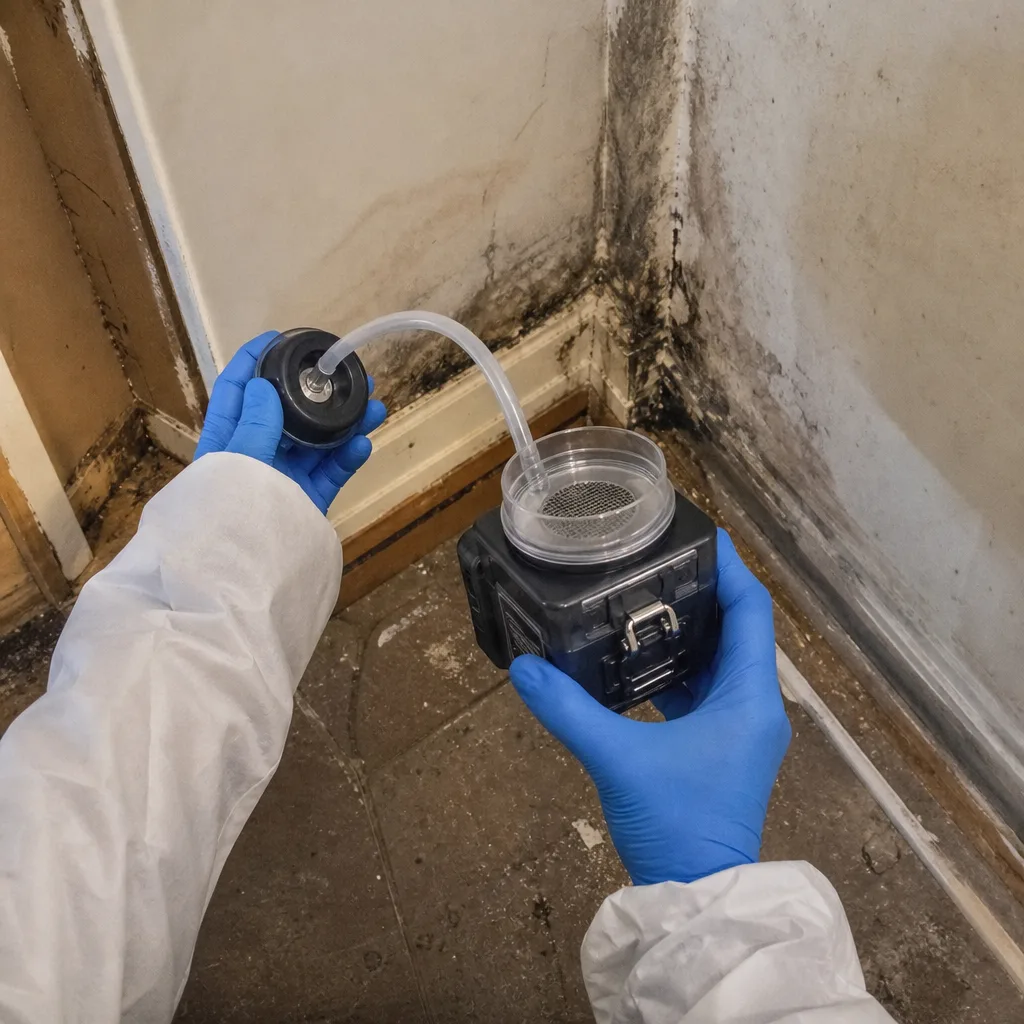
Mold Inspection & Testing
Every El Cajon inspection starts with moisture mapping, not guesswork. We use calibrated pin and pinless meters to find elevation differences in drywall, subfloor, and slab perimeters. In the 1960s ranch homes near Broadway and Main Street, we pay particular attention to attic vent penetrations and return-air plenums where wildfire ash accumulates undetected. Air sampling follows IICRC protocols with lab analysis for spore identification and concentration. The written report includes photo documentation, moisture readings by location, and a scope with line-item pricing before any remediation begins.
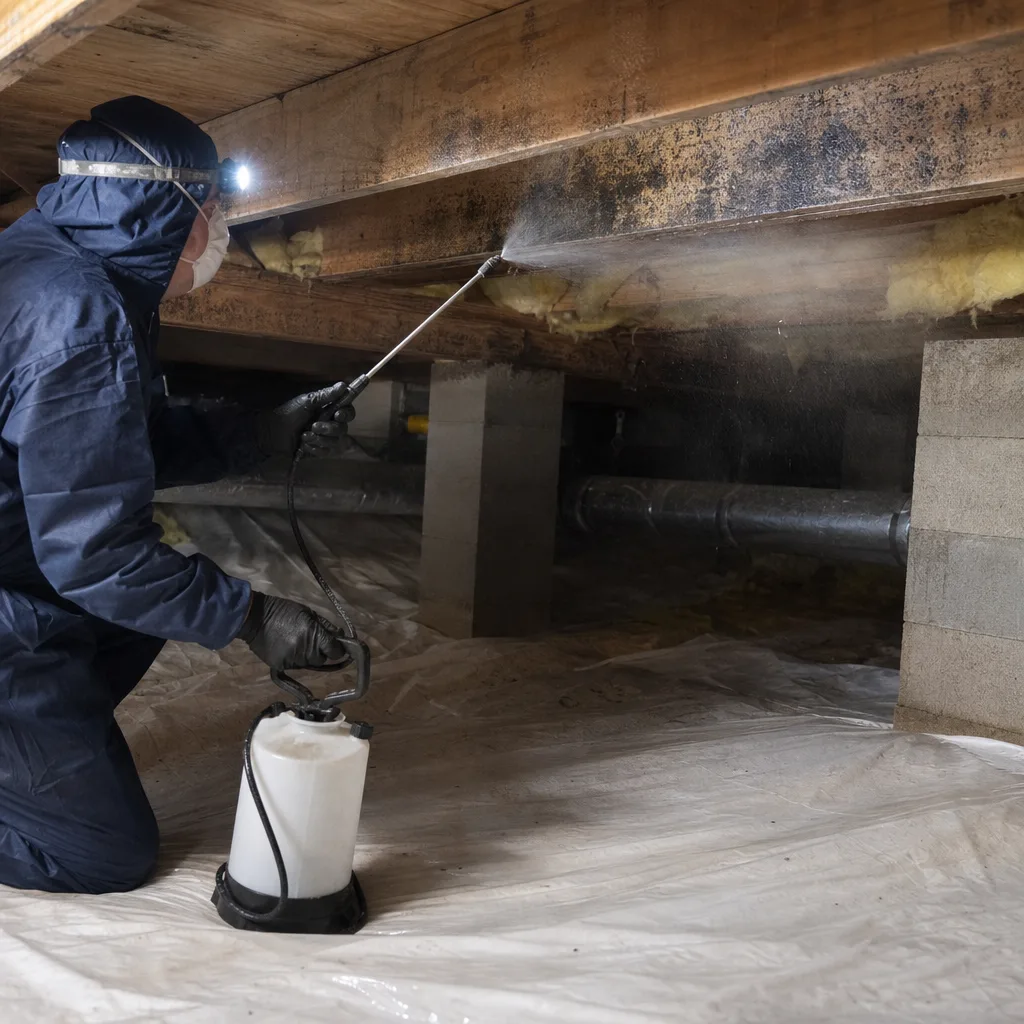
Mold Removal
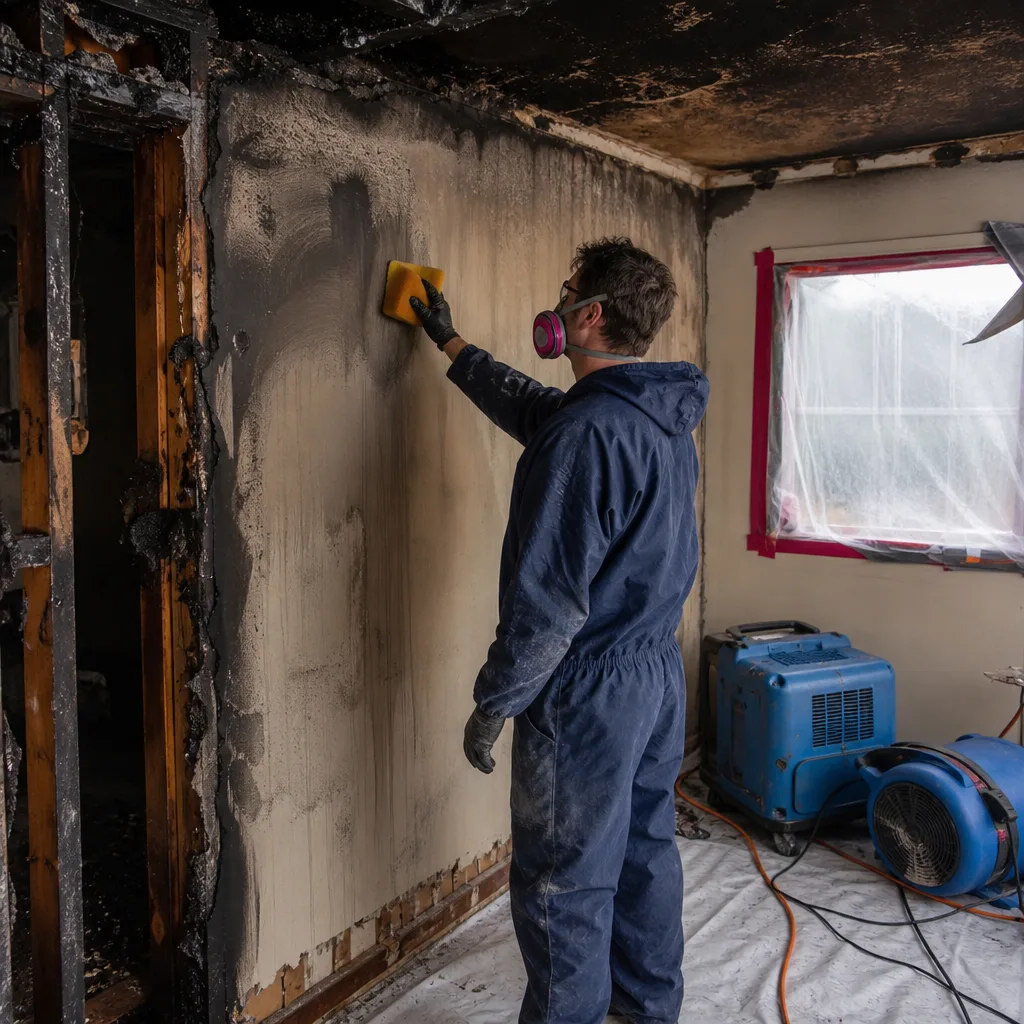
Removal in El Cajon requires containment discipline that coastal contractors sometimes skip. The valley’s tight building envelopes and older ductwork mean one open door can redistribute spores and ash through the entire house. We establish negative air pressure with HEPA-scrubbed exhaust, remove contaminated materials by trade name (drywall, insulation, MDF trim, carpet cushion), and treat structural framing with antimicrobial solutions matched to the material classification. Every bag is sealed, logged, and photographed.
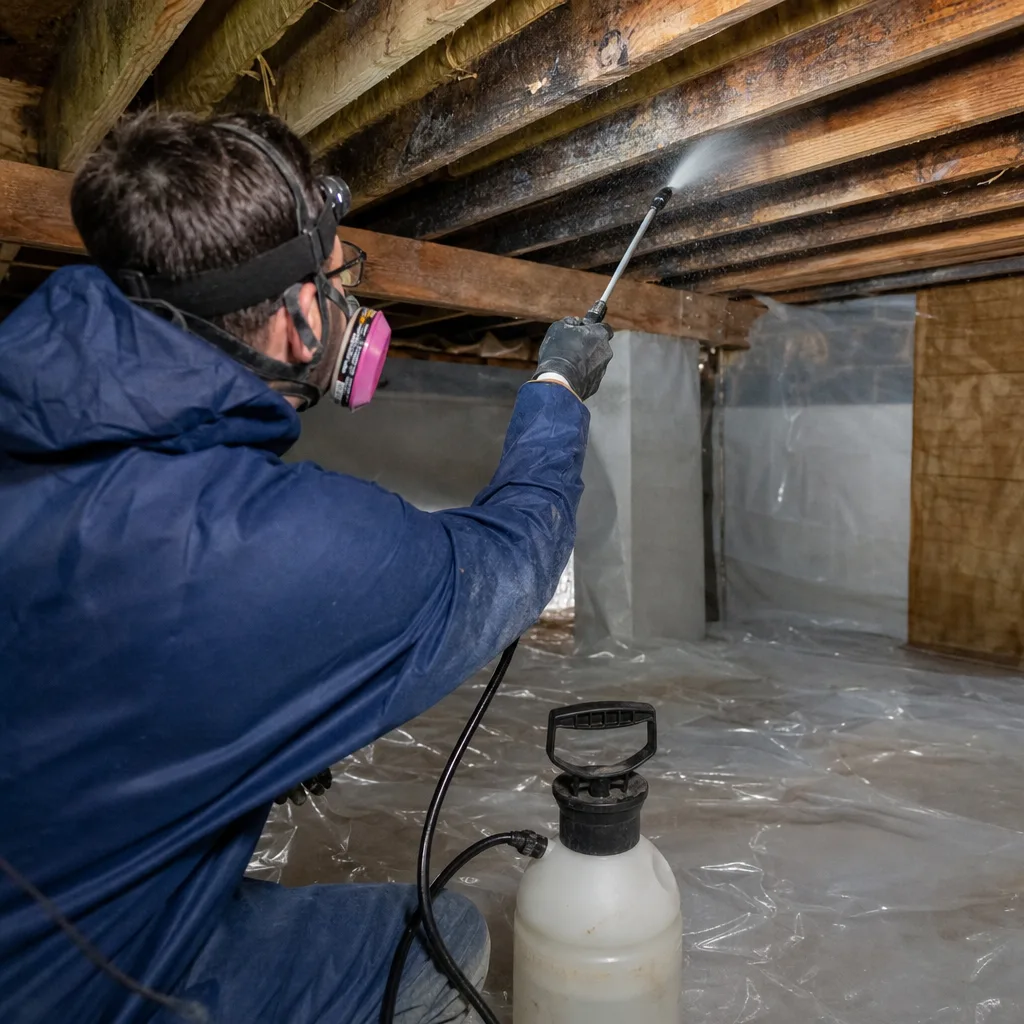
Black Mold Remediation
Stachybotrys and other toxigenic species in El Cajon almost always trace to chronic moisture, not sudden floods. In our market, that means slab moisture migration in original slab-on-grade construction, or slow roof leaks in aging composition shingles that homeowners don’t notice until the smell spreads. We don’t panic-label “black mold” for marketing effect. We sample, identify, and scope the remediation with the same documentation rigor as any other contamination. Full PPE, containment, and post-remediation verification are standard, not upsells.
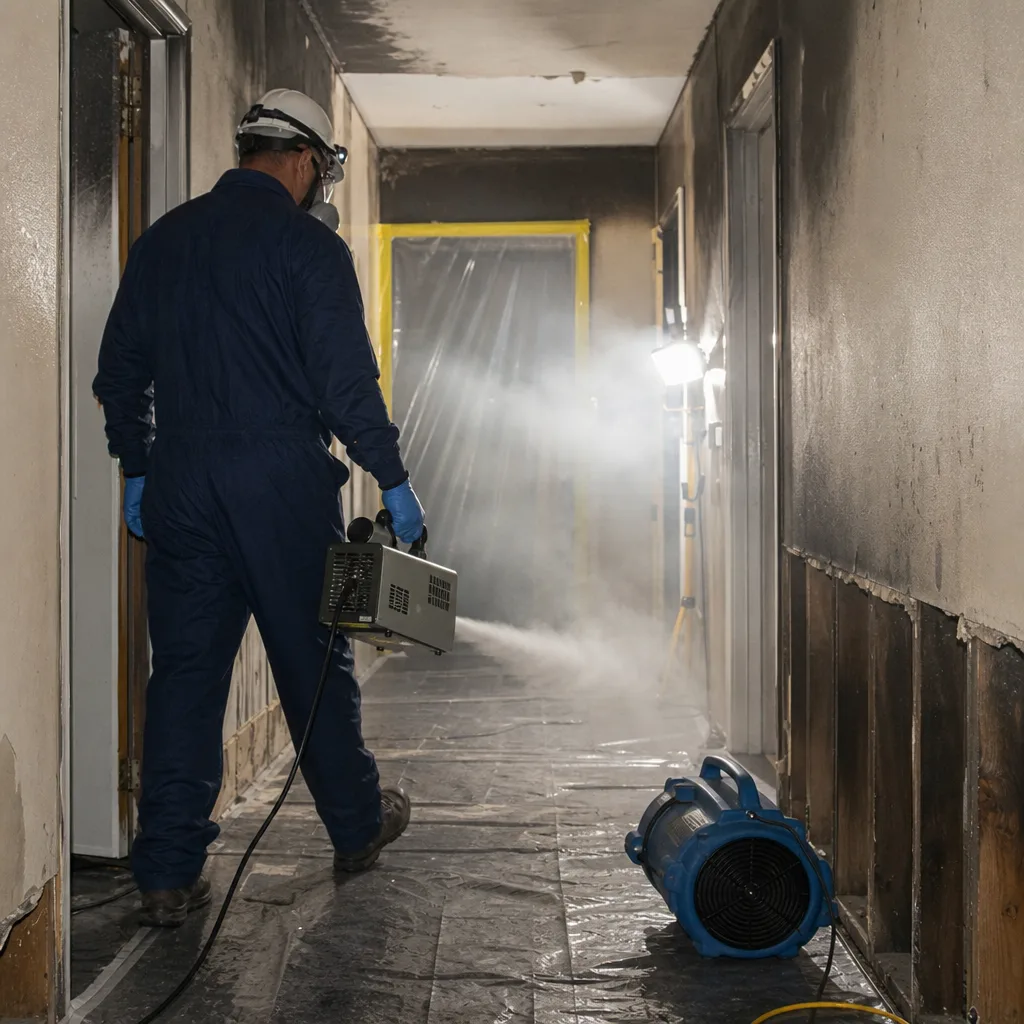
Air Quality Restoration
This is where El Cajon’s unique fire-then-flood profile demands specialized protocol. After the 2023 Laguna foothills fire pushed ash into a 1960s ranch home near Broadway and Main Street, our crew found the homeowner months later with a musty smell every time the heater kicked on. We performed moisture mapping and air quality testing, then set up containment and HEPA air scrubbers while removing contaminated ductwork and applying antimicrobial treatment to attic surfaces. We also installed a Dri-Eaz dehumidifier and XPOWER air movers to dry out a crawl space that had taken on muddy runoff from Forester Creek, then logged final moisture readings to confirm the structure was back to pre-loss condition. Duct cleaning without moisture remediation is incomplete here. We do both, documented.
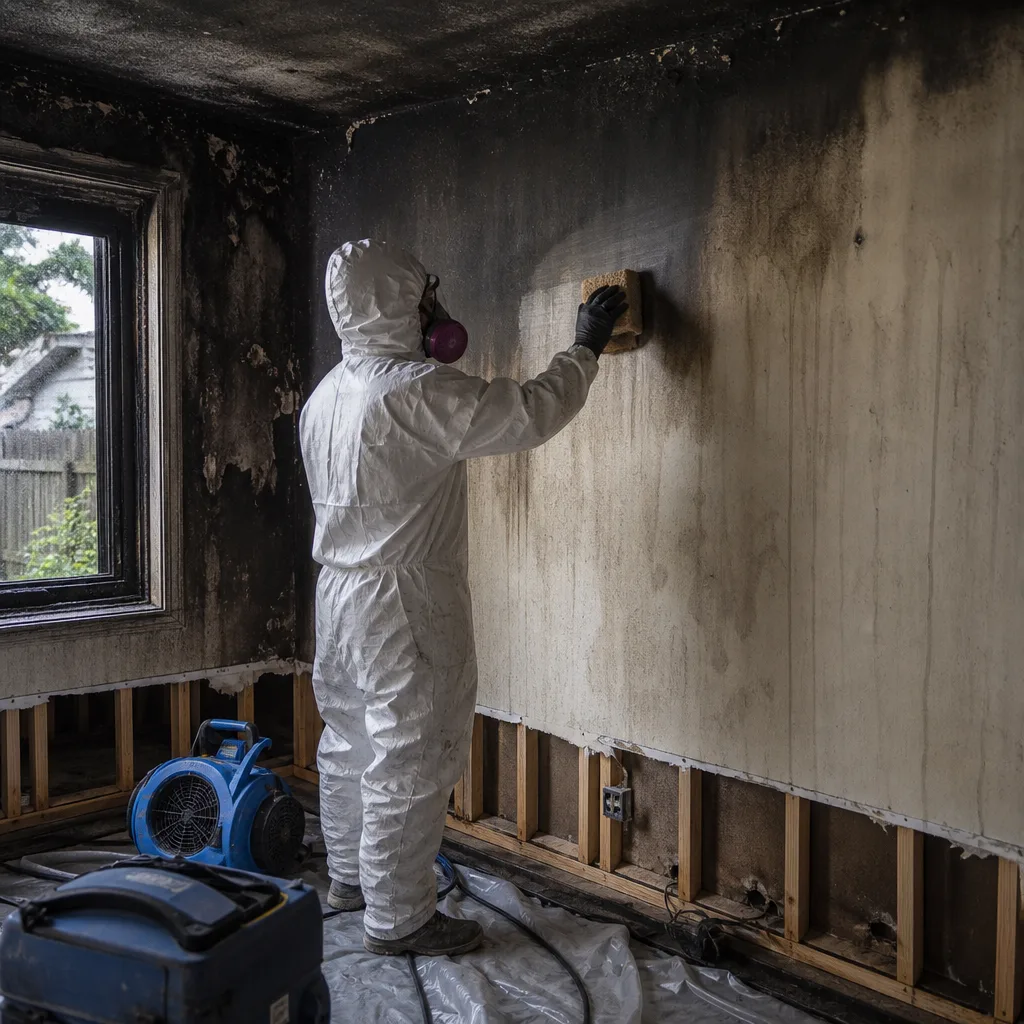
Crawl Space Treatment
El Cajon’s low-permeability soils shed water fast after rain, especially when fire-bared slopes above the valley release sudden runoff. Crawl spaces in the older ranch tracts take on seepage that homeowners never see. We install vapor barriers, dehumidification, and active drainage where indicated, with moisture readings logged to prove the space is dry before we close it up. Surface treatment alone fails in this climate. The heat drives evaporation upward through the slab.
Moisture & Humidity Control
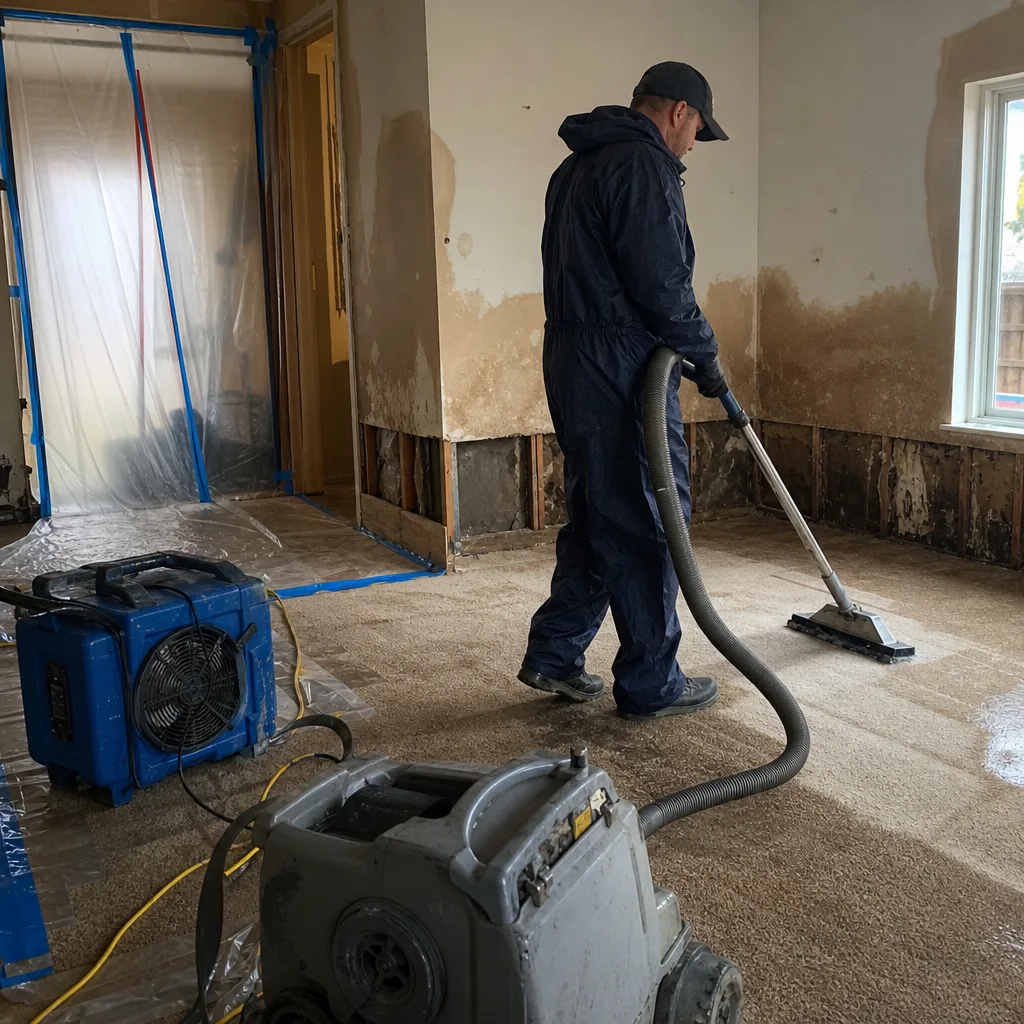
Psychrometric data, vapor pressure differential, tertiary drying. These terms matter because they describe what we measure. In El Cajon’s 100°F-plus summers, relative humidity readings inside a wall cavity can mislead if you don’t account for temperature differential. Our crews calculate grains of moisture per pound of air and track the specific humidity trend until it stabilizes at pre-loss condition. The daily drying log goes to you and your adjuster.
What happens when you call
- 1
A real person answersNo phone trees - you reach a local pro.
- 2
You get an upfront price rangeHonest numbers before anyone is dispatched.
- 3
A background-checked tech heads outLicensed & insured, dispatched right away.
- 4
You approve before work beginsNothing starts until you say go.
 Before
 After
AfterTrusted Brands We Service in El Cajon
Our equipment inventory includes professional-grade drying systems from Dri-Eaz, Phoenix, XPOWER, B-Air, and Injectidry, all maintained to manufacturer specifications and documented to IICRC, RIA, and IFA standards. For El Cajon customers, this means we don’t wait for a rental house to deliver a dehumidifier rated for valley heat. The right machine is on the truck when we arrive. Injectidry’s cavity-drying panels are particularly valuable here for the post-WWII ranch homes with limited access to wall interiors. We stock HEPA filters, antimicrobial solutions, and containment materials locally so there’s no delay between inspection and remediation start.
Common Mold Remediation Problems We See in El Cajon Homes
- Treating only visible mold while missing ash-laden ductwork and attic vents. After Santa Ana wind fire events, fine ash infiltrates through vent screens and settles in ductwork. Months later, the heater or AC recirculates the particulate, and homeowners call for “mold” when the real problem is compounded ash and moisture contamination. We inspect both.
- Using air movers without containment, spreading spores through the entire ranch-style home. El Cajon’s older homes often have continuous attic spaces and interconnected duct runs. One open door or missing poly barrier can redistribute contamination to every room. We seal before we dry.
- Ignoring slab moisture migration and crawl-space seepage after winter runoff. Forester Creek and local drainage channels overflow during heavy rain, especially post-fire. Water enters crawl spaces and wicks through slab edges. Drying the surface drywall leaves hidden moisture that colonizes in 24-48 hours at El Cajon summer temperatures.
- Delayed discovery claims that miss the connection between fire season and mold season. Homeowners don’t associate a January musty smell with October ash infiltration. We document the timeline, the ash presence, and the moisture source so the claim addresses the actual cause.
Pricing for Mold Remediation in El Cajon, CA
| Service | Typical Range in El Cajon |
|---|---|
| Mold inspection & air quality testing | $350-$650 |
| Contained mold removal (single room, no ductwork) | $1,200-$2,800 |
| Full attic remediation with duct cleaning | $4,500-$7,500 |
| Wildfire ash + mold combined protocol | $6,000-$9,500 |
| Crawl space treatment with vapor barrier | $2,500-$5,000 |
| Post-remediation air quality verification | $300-$500 |
What moves a job up or down within these ranges: square footage of affected area, material type (drywall vs. plaster vs. wood framing), accessibility (crawl space height, attic pitch), whether asbestos or lead testing is required for pre-1978 construction, and the extent of ductwork contamination. Every scope is written before work starts. Haven Standard, Clause 1. No additions once the crew is inside.
Bring a competitor’s written estimate and we’ll review it at no charge. Free Second Opinion, standard policy.
We Also Serve Cities Near El Cajon
Our crews work throughout the eastern San Diego county corridor: Mold Remediation in El Cajon is coordinated alongside regular dispatch to Spring Valley, Lakeside, La Mesa, and Santee. Each city’s conditions differ, El Cajon’s valley heat and fire exposure being the most distinctive. We adjust equipment and protocol to the location, not the template.
Serving El Cajon, CA - Our Local Coverage Area
We’re based in the El Cajon area and know this community well. Use the map below to see our service coverage - if you’re nearby, we can almost certainly help.
FAQs - Mold Remediation in El Cajon
Wildfire ash infiltrates attic vents and ductwork during Santa Ana wind events, then sits dormant until your heater or AC recirculates it. The musty smell often traces to ash that has combined with residual moisture in the ductwork or attic insulation, not to standing water. We test for both particulate and spore concentration, then scope remediation that addresses the actual contamination. Call (619) 604-5535 for an inspection with written pricing.
El Cajon runs 15-20°F hotter than the coast, which accelerates mold colonization to 24-48 hours after moisture intrusion and demands dehumidifiers rated for high ambient temperatures. Coastal crews sometimes use equipment that shuts down or underperforms in 100°F-plus conditions. Our Dri-Eaz and Phoenix units are specified for valley heat, and we adjust drying schedules accordingly. The same moisture reading at 75°F coastal and 95°F El Cajon represents different actual water content. We calculate both.
Yes. El Cajon’s low-permeability soils and post-fire runoff patterns drive seepage through slab edges and foundation vents that never produces standing water visible from the access hatch. Vapor pressure differential draws moisture upward through the slab into wall framing. We find this regularly in 1950s-1970s ranch homes near Madison Avenue and the older tracts above Jamacha Road. Moisture mapping with pinless meters finds what eyes miss.
Schedule a combined inspection that tests for particulate contamination and mold spores simultaneously. Treating one without the other wastes money and leaves the odor source active. Our protocol addresses both: HEPA air scrubbing for particulate, containment and removal for mold, duct cleaning where indicated, and moisture control to prevent recurrence. We document the fire-to-mold timeline for your adjuster. Call (619) 604-5535 to book.
Yes. Category 1 clean water from a supply line leak requires different antimicrobial selection than Category 3 sewage intrusion or fire-suppression runoff that carries ash and debris. El Cajon’s post-fire flooding often produces Category 2 or 3 conditions even from rainwater, because burned slopes shed sediment and ash into Forester Creek and local drainage. We classify the water source, document it with photos, and select remediation products matched to the contamination level. IICRC protocol, followed precisely.
Written by Alicia Brennan, Owner at Back to Dry Restoration, serving El Cajon since 2011 under The Haven Standard.